You're standing in the drugstore aisle, box of whitening strips in hand, crunching the numbers. They're cheap, easy to grab, and those before-and-after shots on the box almost look too good. But the real question isn't whether strips work — it's whether they'll work on your teeth, with your stains, at the shade you actually want. That's a different question, and the answer isn't on the box.
At Care Dental Center in Carson, CA, Dr. Omid Barkhordar and the team field this comparison regularly. Patients weigh the same pros and cons, and the goal is always to help you land on what makes sense for your teeth and your budget — not just what sounds good.
Key Takeaways
- Whitening strips tackle surface stains, but results come slower and less evenly than with professional options.
- Professional whitening uses stronger gel and custom trays for faster, longer-lasting changes.
- Getting a dental exam first helps protect your teeth and keeps expectations realistic.
The Quick Answer: Which Option Works Better for Most People?
If your stains are mild and you're patient, strips can make a visible difference with regular use. But if you want faster, more even, or deeper results, professional whitening stands out.
When Whitening Strips Make Sense
Strips make sense if your teeth are only a little yellow and you're not in a rush. You'll probably notice some brightening after a full box. They're the cheapest way to test the waters before thinking about a dental visit.
But strips aren't built for everyone. They're shaped for straight teeth and only cover the front, so if your teeth are crowded or rotated, results can get patchy.
When Professional Treatment Is the Better Fit
Professional teeth whitening in Carson is the better call if you've got moderate to heavy stains, want fast results, or care about an even shade. It's also the right move if you have dental work, sensitive teeth, or stains that go deeper than the surface.
Dentist-supervised options — like in-office whitening or custom tray kits — use prescription-strength gel and trays molded exactly to your teeth. That combination helps the whitening agent reach more areas evenly, with less risk of irritating your gums.
A Simple Way to Match the Option to Your Goals
| Your Situation | Strips | Professional Whitening |
|---|---|---|
| Mild yellowing, no rush | Works pretty well | Faster, more even |
| Moderate to heavy stains | Not much effect | Handles it better |
| Crowded or uneven teeth | Likely patchy | Custom trays help |
| Dental crowns, fillings, or bonding | Won't change color | Dentist can plan around it |
| Sensitive teeth | Might increase sensitivity | Dentist can manage it |
| Need quick results | 2–4 weeks | 1–2 visits possible |
This table is just a starting point. Your exact tooth color, stain type, and dental history all matter when choosing.
How Each Method Whitens Teeth
Both strips and professional whitening use peroxide to bleach teeth, but the strength, how it's applied, and what it actually reaches are quite different.
How Peroxide-Based Whitening Lifts Stains
Both options use hydrogen peroxide or carbamide peroxide. Carbamide peroxide converts to hydrogen peroxide when it contacts moisture. According to the American Dental Association's overview of whitening agents, hydrogen peroxide moves through the enamel into the dentin and reacts with color compounds, breaking them apart.
Whitening isn't just a surface scrub. The peroxide gets into the tooth and breaks up the molecules that make teeth look yellow, brown, or gray. How deep it goes depends on the gel's strength and how long it sits on your teeth.
Extrinsic stains — from coffee, tea, wine, or tobacco — are on or near the surface and usually respond well to bleaching. Intrinsic stains — inside the tooth from aging, certain medications, or fluorosis — are tougher and may not lighten as much.
What Whitening Strips Actually Do
Over-the-counter strips use a thin plastic strip coated with low-concentration peroxide gel, usually 6% to 10% hydrogen peroxide. You stick them to your front teeth for about 30 minutes, once or twice daily, for two to four weeks.
Because the gel is weaker, you'll see changes slowly. Strips generally cover six to eight front teeth and work best on straight, flat surfaces. If a tooth isn't in full contact with the strip, it won't whiten as much.
Strips can't reach between teeth or around sides that overlap. That limitation shows up in the final result.
What In-Office Whitening and Dentist-Supervised Kits Do Differently
In-office whitening uses much stronger gel — often 25% to 40% hydrogen peroxide — applied by a clinician who protects your gums first. Some offices use a light or heat source, though the evidence on whether that meaningfully boosts results is mixed.
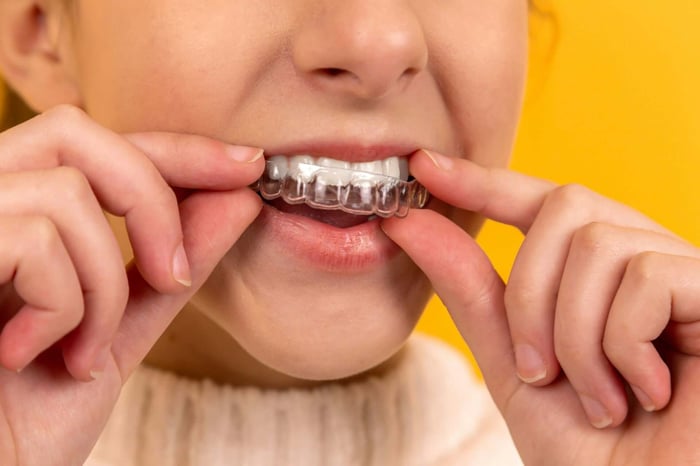
Dentist-supervised take-home kits use a lower but still professional-grade gel (10% to 22% carbamide peroxide), delivered in trays molded to your teeth. Those trays keep the gel right where it needs to be, covering every surface evenly.
Custom trays are a major reason dentist kits outperform strips, even at similar gel concentrations. If you're dealing with stubborn stains that don't respond to bleaching, porcelain veneers may be worth discussing as an alternative.
Speed, Evenness, and How Long Results Tend to Last
Speed matters to most people, and professional whitening has a clear edge.
How Fast You May Notice a Change
With strips, most people start to see a slight difference after five to seven days. Real improvement usually takes two to four weeks of daily use. Skipping days or cutting sessions short slows things down.
In-office whitening delivers visible changes in one visit — usually an hour or two — because of the stronger gel and controlled setting. Dentist-supervised tray kits fall in between, with results typically showing in about a week of nightly use.
Why Uneven Whitening Happens More Often With Strips
Uneven whitening is a common complaint. Strips only work where they make contact, so any gap means less whitening in that spot. Teeth that are rotated, crowded, or shaped differently are especially prone to patchy results.
Custom trays from your dentist wrap gel around the entire tooth, including between teeth and slightly under the gumline. That coverage makes consistent whitening far more likely.
What Affects Longevity After Treatment
- Diet: Coffee, tea, red wine, and dark berries stain teeth relatively quickly.
- Tobacco: Smoking or chewing accelerates staining.
- Oral hygiene: Consistent brushing and regular cleanings help maintain results.
- Starting shade: Darker stains may need touch-ups sooner.
- Treatment type: In-office and dentist kits typically last six months to two years with maintenance. Strips need more frequent repetition.
Touch-up trays from your dentist can extend results. Ask what makes sense for your habits.
Sensitivity, Gum Comfort, and Safety Considerations
Sensitivity is the most common concern, and it's worth addressing directly.
Why Tooth Sensitivity Can Happen With Any Whitening Method
Peroxide opens tiny channels in the enamel as it works. This can allow sensations to reach the nerves, causing sharp, brief sensitivity during or after whitening. It usually fades within a day or two.
If you already have enamel wear, exposed roots, or sensitive teeth, you're more likely to feel it. Longer exposure or gel contact with your gums can also make discomfort worse.
How Generic Fit Can Lead to Gum Irritation
Strips and one-size trays often let gel touch the gums, especially where the fit isn't snug. This can cause mild burning or temporary white spots on the gumline.
Custom trays keep gel on your teeth and away from your gums — less waste, less irritation, more comfortable experience overall.
Why a Dental Exam Matters Before Whitening
According to MouthHealthy, the ADA's consumer site, you should check with your dentist before starting any whitening. A quick exam can spot cavities, gum issues, or enamel problems that need attention first.
Whitening over a cavity, for example, can cause sharp pain because the peroxide reaches the nerve directly. A dental checkup in Carson before whitening is simply the smarter move.
Cost, Convenience, and Value Over Time
Upfront Cost vs. Repeat Purchases
A box of strips usually runs $25 to $65. Most people use one box per treatment, and results fade in two to six months — meaning several boxes a year if you want to maintain the effect.
Professional whitening costs more upfront, but results last longer and need fewer touch-ups. With custom trays, you reuse the trays and just buy more gel as needed.
One Visit Compared With Daily Wear at Home
Convenience is personal. If you dislike wearing strips every day for weeks, in-office whitening takes about two hours, and you're done. If you prefer doing it at home, a dentist's tray kit gives you flexibility without sacrificing results.
Strips require patience and precision. Miss a day or misalign them, and results suffer. Professional options remove most of the guesswork.
When Financing and Custom Options May Make Sense
If the upfront price of professional whitening feels like a stretch, financing and payment plans are often available. Insurance usually doesn't cover cosmetic whitening, but flexible payment options can make it more accessible.
When you factor in buying strips four to six times a year versus one professional treatment plus occasional touch-ups, the value comparison shifts considerably.
Who Should Consider a Dental Consultation First
A dental consult isn't just for people with complex dental histories. It's genuinely useful if you're unsure whether whitening will work for your specific stains.
People With Restorations, Darker Stains, or Sensitive Teeth
Whitening only affects natural enamel. Crowns, composite fillings, veneers, and dental bonding won't change color. If your front teeth include any of these, whitening your natural teeth can create mismatched shades.
People with deep stains from fluorosis, tetracycline, or aging dentin often find that neither strips nor professional whitening produces satisfying results. A dentist can tell you directly whether whitening is likely to help or whether a different approach suits you better.
When Surface Stains Might Respond to Simple Whitening
If your teeth are generally healthy and your stains are mild or fairly recent — a few years of coffee or tea — strips could be worth trying. Mild surface stains often respond better to bleaching than deeper or older discoloration.
Questions to Ask Before Choosing a Whitening Option
- Is my staining mostly on the surface, or deeper?
- Do I have crowns, fillings, or bonding on my front teeth?
- Do I notice sensitivity when eating cold foods?
- Am I hoping for gradual improvement over weeks, or a visible change in one or two visits?
- Have I had a dental exam in the past six months?
If the first three questions raised concerns, talking to a dentist before picking a whitening method is the right call.
Frequently Asked Questions
Does In-Office Whitening Usually Get Teeth Whiter Than Strips?
Most of the time, yes. Dentists use a stronger peroxide gel in a controlled setting, reaching deeper stains that strips can't touch. Custom trays also ensure every tooth gets even coverage.
How Long Do Whitening Results Last With the Dentist vs. Strips?
Professional whitening typically lasts six months to two years, depending on diet, home care, and whether you use maintenance trays. Strips usually need repeating every two to four months, especially with regular coffee or tea.
What Are the Typical Costs for Professional Whitening Compared to Strips?
Strips run about $25 to $65 per box. In-office whitening is typically a few hundred dollars per session. Dentist take-home kits are in a similar range and include reusable custom trays. Many offices offer payment plans if budget is a concern.
Is Tooth Sensitivity More Common With Strips or In-Office Whitening?
Both can cause temporary sensitivity. In-office treatments use higher concentrations, which can increase the risk if not carefully managed. Strips can irritate gums if the fit is poor, or cause sensitivity with overuse. Your dentist can recommend ways to manage it for either option.
Which Option Is Safer If I Have Crowns, Fillings, or Bonding?
Neither will damage your restorations, but neither will lighten them either. Whitening your natural teeth while leaving restorations unchanged can create mismatched shades. A dentist can assess your situation and help you plan before you start.
Does Dental Insurance Cover Whitening?
Whitening is almost always considered cosmetic, so insurance rarely covers it. Many dental offices offer payment plans to make professional whitening more manageable.
Whitening results depend less on which product you choose and more on whether that product matches your actual stains, your tooth anatomy, and the condition of your enamel. Strips work for the right person in the right situation. Professional whitening handles what strips can't.
If you're not sure which category you fall into, that's exactly the kind of question the team at Care Dental Center is set up to answer. Call (310) 626-0004 or request an appointment online to find out what whitening can realistically do for your smile.