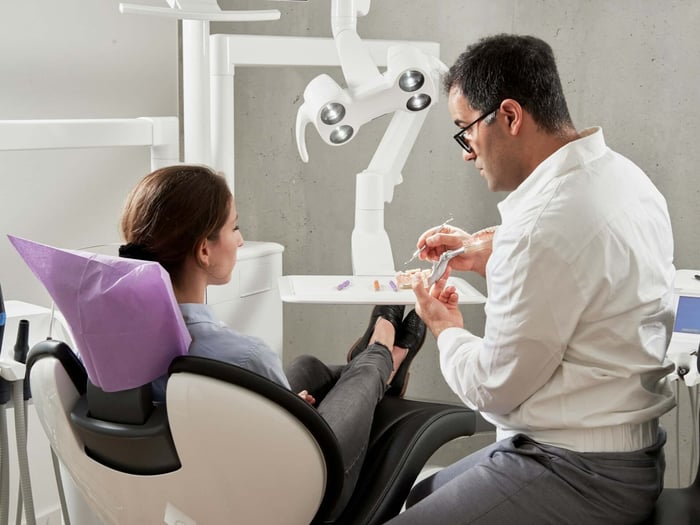
Your dentist just told you a regular cleaning isn't enough. Now you're wondering what that actually means — what's going on under your gums, what comes next, and whether this is serious.
It's a situation a lot of people find themselves in, sometimes after years of thinking their teeth were doing just fine.
At Care Dental Center in Carson, the team takes time to explain what's happening with your gums and talk through what makes sense for you.
Key Takeaways
- Periodontal treatment tackles infection and buildup below the gumline, going deeper than a standard cleaning.
- Treating gum disease early is simpler and less expensive than waiting until it's advanced.
- Good home care and regular dental visits both matter for keeping gum disease under control.
How Gum Treatment Differs From a Routine Cleaning
A regular cleaning clears away plaque and tartar from the surfaces of your teeth, mostly above and just at the gumline.
Periodontal treatment goes further. It targets infection and buildup that's already moved below the gumline — places a standard cleaning can't reach.
What Periodontal Disease Means in Simple Terms
Periodontal disease is an infection in the tissues that hold your teeth in place. That means your gums, the ligament that supports your teeth, and the bone underneath.
It all starts with plaque, that sticky film of bacteria that's always forming on your teeth.
If you don't remove plaque completely, it hardens into tartar. Once tartar builds up, inflammation kicks in and, over time, the infection spreads downward.
Gum disease affects a lot of adults in the U.S. — about 4 in 10 adults over 30 have some level of periodontitis.
The disease can be mild or pretty severe, but even early gum problems respond better with professional care.
There are two main types: gingivitis and periodontitis. Knowing the difference helps you understand why your dentist might suggest more than a regular cleaning.
Early Gingivitis vs. More Advanced Periodontitis
| Feature | Gingivitis | Periodontitis |
|---|---|---|
| Tissue involved | Gums only | Gums, ligament, and bone |
| Reversible? | Yes, with treatment | No, but manageable |
| Bone loss | None | Present |
| Pocket depth | Normal (1–3 mm) | Deepened (4 mm or more) |
| Treatment needed | Improved hygiene and cleaning | Scaling, root planing, or more |
Gingivitis is the early stage. You might see red or tender gums, or notice they bleed when you brush. At this point, the damage is still reversible. A professional cleaning and better home habits can get your gums back on track.
Periodontitis is more serious. The infection has moved into the bone and supporting tissue. Bone loss at this stage can't be reversed, but you can slow it down significantly with the right treatment.
Your dentist checks the depth between your gum and tooth to see how far things have gone.
Signs That Point to Trouble Below the Gumline
Some signs of gum disease are easy to spot; others not so much.
Gum recession — when your gumline seems to pull back from your teeth — often sneaks up without pain. By the time you notice it, the disease has usually been there for a while.
Watch out for these warning signs:
- Gums that bleed when brushing or flossing
- Bad breath that sticks around, even after brushing
- Red, puffy, or sore gums
- Gums pulling away from teeth
- Teeth that feel loose or start shifting
- Sensitivity near the gumline
Gum disease can get serious before you feel anything. That's why a yearly dental checkup with gum measurements is worth it, even if everything feels fine.
What Happens During Nonsurgical Periodontal Care
Most people with early or moderate gum disease start with nonsurgical periodontal therapy. It's more thorough than you might expect, but it's manageable.
Exam, Measurements, and Treatment Planning
Before anything starts, your dental team takes a close look at your gums.
They'll use a small probe to gently measure the space between your gums and each tooth. These numbers show exactly where inflammation and infection are, and how deep the pockets go.
Digital X-rays help spot any bone loss.
With all that information, the team puts together a treatment plan that targets the areas that need it. Most plans break the mouth into sections — usually quadrants — so each visit is focused, and your gums get a chance to heal between appointments.
Scaling and Root Planing: Step by Step
Scaling and root planing is the main nonsurgical treatment for gum disease.
Some folks call it a deep cleaning for gum disease, which fits.
Your provider numbs the area so you're comfortable. Here's what they do:
- Scaling: They use special tools to remove plaque and tartar from the tooth surface and inside the pocket below the gumline.
- Root planing: They smooth out the root surface. Bacteria love rough roots, so smoothing helps the gums heal and reattach.
- Irrigation: Sometimes they rinse the area with an antimicrobial solution to cut down on bacteria.
- Medication placement: In some cases, they'll put antibiotic gel or a prescription rinse right in the pocket to help healing.
The whole process usually takes one or two visits, depending on how many spots need work. You might feel a bit tender for a few days afterward, which is normal as your gums recover.
How Gum Healing and Follow-Up Visits Work
After scaling and root planing, your gums need time to heal and reattach to the root. Most people come back for a recheck in about four to six weeks.
At that visit, the team measures the pockets again and checks how things are going. Often, the pockets shrink and get easier to keep clean at home.
If some spots stay deep or infection lingers, your dentist will talk through what's next.
After that, most people move to a periodontal maintenance schedule — usually every three to four months instead of every six. That schedule is what keeps gum disease in check over the long term.
When Advanced Periodontal Care May Be Recommended
Most cases respond well to nonsurgical treatment. If deep pockets or tissue damage stick around after scaling and root planing, your dentist might talk about surgical options.
Why Deep Pockets Sometimes Need Surgery
Sometimes, pockets are just too deep for cleaning tools to reach. If bacteria keep thriving in those spots, a procedure called flap surgery — or pocket reduction surgery — might be needed.
During this, the dentist gently lifts the gum tissue to get direct access to the root and bone. They remove tartar, sometimes reshape the bone, and stitch the gum back in place at a healthier level.
The main goal is to eliminate the pocket or make it shallow enough for you to keep clean.
Guided tissue regeneration sometimes gets added to flap surgery. This involves placing a tiny membrane between the gum and bone to help your body rebuild lost tissue and bone in certain spots.
Gum Grafts and Bone Support Procedures
If gum recession has left the root exposed, a gum graft might be suggested.
They'll take soft tissue from another spot in your mouth (or a donor source) and cover the exposed root. That protects the root, cuts down on sensitivity, and helps stabilize the gumline.
If you've lost bone because of advanced periodontitis, bone grafting may be needed. The dentist places graft material where bone is missing to encourage new growth. This matters especially if you're considering dental implants later on — implants need enough bone to stay put.
How Healthy Gums Support Future Restorative Care
Healthy gums are the foundation for any other dental work.
Crowns, bridges, and dental implants all depend on stable, infection-free gums and good bone support. Trying to place new dental work over infected gums just doesn't hold up.
If you're thinking about restorative treatment, treating gum disease first isn't a delay — it's what makes long-term results possible.
Healthy gums are also less likely to contribute to bigger health problems, like heart issues or difficulty managing blood sugar if you have diabetes.
Why Early Periodontal Treatment Makes Everything Easier
Catching gum disease early makes everything easier — treatment, comfort, cost, and recovery.
Comfort, Cost, and Long-Term Benefits of Acting Early
Gingivitis or mild periodontitis usually gets better with just one or two scaling visits and better home care. That's a lot simpler than dealing with surgery, grafts, and long healing times.
Early treatment often fits within what dental insurance covers, at least partly. Surgical care costs more and takes more time.
Periodontitis is one of the top reasons adults lose teeth. The patients who keep their teeth for life are almost always the ones who caught the problem early and stayed on their maintenance schedule.
Home Habits That Support Professional Treatment
What you do at home every day matters just as much as the treatment you get in the office.
Here's what helps:
- Brush twice daily with a soft toothbrush, using gentle circles
- Floss once a day, sliding just below the gumline
- Use an antimicrobial mouth rinse if your dentist suggests it
- Skip tobacco — it raises your risk and slows healing
- Drink plenty of water to avoid dry mouth
Consistency beats intensity every time. Scrubbing hard can actually hurt your gums and make things worse. A gentle, steady routine does more for your gum health than occasional aggressive brushing.
When to Schedule a Gum Health Evaluation
If it's been over a year since your last dental checkup — or you've noticed bleeding, puffiness, or changes around your gums — it's time for a gum health evaluation.
You don't have to wait for pain to get checked out.
If you're already managing gum disease, sticking to your maintenance visits is critical. Missing them lets bacteria build up again, and the disease can come back.
Frequently Asked Questions
Can Gum Disease Improve With Home Care, or Do You Usually Need Professional Help?
Home care helps you manage gum disease, but once tartar forms or pockets develop, you'll need professional treatment.
Brushing and flossing can't reach hardened deposits below the gumline. After professional care, good home habits help keep your gums healthy.
What Are the Most Common Treatment Options for Moderate Periodontitis?
Scaling and root planing is the main treatment for moderate periodontitis.
Depending on how things go, you might need antibiotic therapy, extra cleanings, or maintenance visits every three to four months. Surgery only comes up if pocket depths don't improve enough with nonsurgical care.
Is Periodontal Care Painful, and What Can You Do to Stay Comfortable?
Your dentist numbs the area before scaling and root planing, so you'll feel pressure but usually not pain.
Some tenderness for a few days is normal. Over-the-counter pain relievers and eating softer foods for a day or two can help.
How Many Visits Does Periodontal Therapy Usually Take, and How Long Is Recovery?
Scaling and root planing usually takes two to four visits, divided by areas of the mouth. A follow-up happens about four to six weeks later.
Most people feel more comfortable within a week after each appointment.
Can You Keep Your Teeth Long Term After Periodontal Disease Is Diagnosed?
Yes, many people keep their teeth for life with the right treatment and regular maintenance.
The key is to manage the condition before major bone loss happens. Staying on a regular periodontal maintenance schedule after treatment makes all the difference.
What Health Risks Can Happen if Gum Disease Is Left Untreated?
When gum disease goes untreated, you're much more likely to lose teeth. Research also connects periodontitis with bigger health problems, including heart disease and difficulty controlling blood sugar in people with diabetes.
The infection and inflammation don't stay confined to your mouth. Taking care of your gums matters for your overall health, not just your teeth.
If your dentist has mentioned your gums need attention, or you've noticed bleeding or changes and haven't had them checked, now is the right time to find out where things stand. Gum disease responds well to treatment when it's caught early — and even when things have progressed, the right care still makes a real difference. Call (310) 626-0004 or request an appointment for new patients online. The team at Care Dental Center will walk you through what's going on and what your options are.